Steel guitarist Bobby Koefer, one of the last surviving members of the Texas Playboys who recorded and toured with Bob Wills, has died at the age of 95. Here is Bobby's obituary, written by western swing historian Buddy McPeters for publication here at BatesLine:
John Robert 'Bobby' Koefer, passed away Saturday morning March 16, 2024, at St. Charles Medical Center Hospital in Bend, Oregon after a recent illness. He was a Bend resident for over 35 years.
Mr. Koefer was born on August 18, 1928, in Clay Center, Kansas. He was the son of Josephine (nee Dakin) & John Koefer who were farmers in Clay County where Bobby spent his early childhood. In his early teens ca. 1941-42 his family moved to Depoe Bay, Oregon.
In his preteen years in rural, sparsely populated Clay County, Koefer took an interest in music after hearing Hawaiian steel guitar records on the Hawaii Calls radio program. Other records inspired him including those featuring steel guitarist Leon McAuliffe with western swing band Bob Wills and his Texas Playboys in Tulsa, OK. Bobby heard their daily radio broadcasts from Cain's Ballroom over KVOO and many of their records. Especially the instrumental recordings with Leon's playing on 'Steel Guitar Rag' from 1937 and the original Wills version of 'San Antonio Rose' from 1938 without vocals. They caught his ear when he heard Leon's exciting steel guitar solos and that famous Bob Wills holler, "Take it away, Leon!" Bobby vowed that he would learn to play the steel and do it well. He vowed someday he would play steel with Wills as a Texas Playboy bandmember, and that Bob would also holler out his name on records. The rest of the story is the stuff legends are made of!
In the late 30's Koefer bought a steel guitar via mail order. When it arrived, there was no instruction book, no steel bar to slide on the strings and no picks. He had no teacher and no mentors to show him how to properly tune the steel or how to go about playing it. He didn't know anyone who played the steel. Strictly self-taught and self-educated about music, relying on his instincts, he took the bull by the horns. He convinced the owner of a local machine shop to make a four-inch polished piece of angle iron to use in place of a steel bar to slide on the strings. Thumb picks were acquired via mail order as there were no music stores nearby.
He set out on his own, all alone, experimenting and discovering how to get the steel guitar sounds he heard on the radio. He made up his own tunings, found his own chords and discovered how to play the melodies dear to his heart. Soon he began to play his own steel guitar licks and made up his own solos. In the process he formulated his own unorthodox approach to playing the instrument which was completely unique and original. Many of his dynamics and techniques to this day are still his own and few have ever been able to duplicate or replicate his style or his sound. He was a readily identifiable steel player who only needed to play one or two notes and instantly people knew it was him playing.
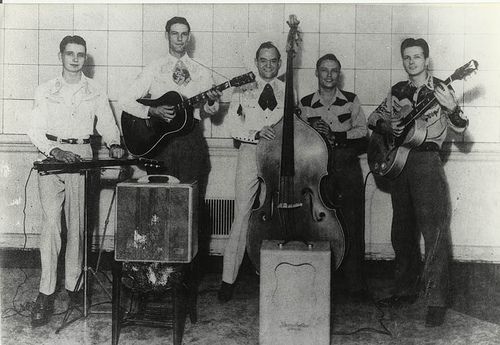
After his family moved to the Oregon coast he began playing in bands in the area. He wound up traveling around the country playing music. In 1947 he was 19 years old and made his first recordings in Dallas with western swing bandleader Homer Clemons & His Texas Swingbillies, 'Operation Blues' b/w 'Little Beaver' on the Blue Bonnet label. Both feature Koefer's jaw-dropping steel guitar style. Stints with Bill Boyd's 'Cowboy Ramblers' and Jim Boyd's 'Men of the West' and other DFW region bands followed.
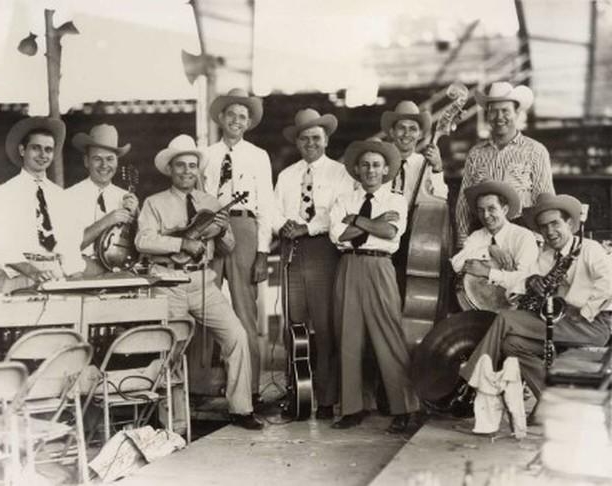
In 1950 while playing in Indiana with Tex Justice word came that Bob Wills needed a steel player to replace departing Billy Bowman who had been drafted. Bobby called Wills who sent him train fare to Little Rock to audition. Bob hired him and he played with the Texas Playboys until Bowman returned from the Army in 1952. With Wills he made recordings for MGM, notably 'Hubbin' It' and remakes of popular Wills fiddle tunes 'Twinkle Star' and 'Brown Skin Gal', featuring a stunning steel solo by Koefer which elicited Wills hollering out his approval, "Ah, Bobby, Mr. Koefer! Ah, Let's gopher!!" Koefer was also featured performing in seven early music video film shorts aka 'soundies' with Wills & his Texas Playboys for Snader's Telescriptions in 1951. He is both seen and heard to great advantage with his captivating solo on 'Deep Water' and his chilling intro and fills on 'Blue Prelude' which are noteworthy.
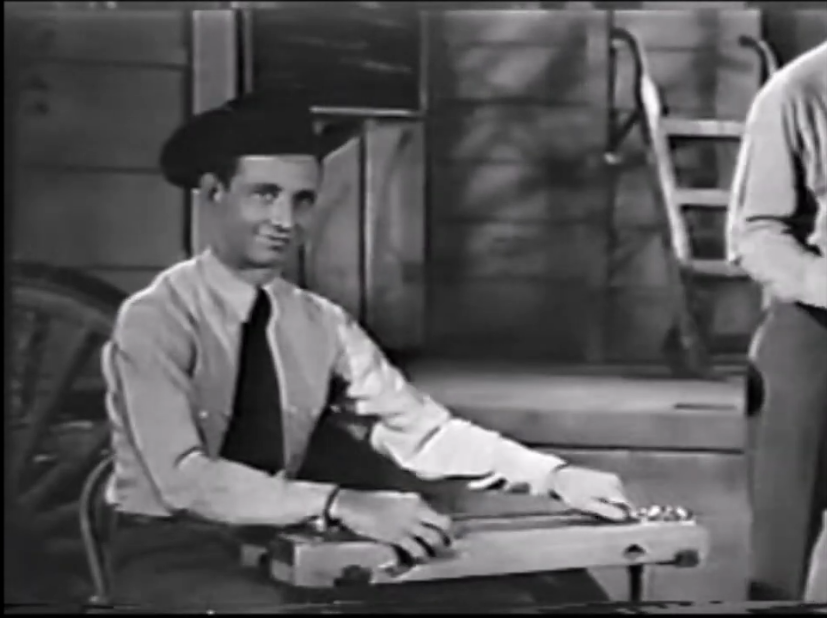
In 1952 he joined Pee Wee King & his Golden West Cowboys band for three years. They recorded for RCA and were regulars on the Grand Old Opry. Bobby was featured well in King's records, particularly hot jazz and western swing arrangements of 'Flying Home', 'Seven Come Eleven', and 'Farewell Blues'. In 1955 he joined Billy Gray & His Western Okies in who had a residency at a dancehall in Dallas. He stayed a year racking up more recordings including 'Bandera Shuffle', 'Tippin' In' and his own steel guitar instrumental composition 'Curtain Call', a favorite of steel guitarists far and wide who consider it a standard like 'Steel Guitar Rag'. In 1956 Bobby led his own group the 'Hi-Ho Four' as the house band at the 'Hi-Ho Club' in Wichita, KS for 5 years playing six (& sometimes seven) nights a week. He played C&W, western swing, rockabilly & early rock music and made a few records on the 'Hi-Ho' label. After five years, playing night after night, the club suffered dwindling audiences, had fewer dance patrons and ever-changing music styles evolving more into rock and roll, he decided he needed a change and called it quits.
He moved to Alaska in 1961 and stayed for over 25 years. He played with some local musicians briefly in Anchorage. Then he spent 5 years far from civilization living in relative isolation among primitive native Eskimo's. He completely immersed himself in their culture on Little Diomede Island in the Bering Strait, (2 miles from Soviet Russia) where he participated in village hunting parties during the harsh winters, living in igloos and working on their fishing boats.
He eventually moved inland near Fairbanks where he worked in canneries as well as construction. He also drove a forklift for a sand and gravel supplier where he became shop foreman and union shop steward. He worked there 20 years and retired in 1986. He was away from the music world for so many years, people made up stories including one tall tale that after he hit a gold strike, he buried his steel guitar and even had a funeral for it, vowing to never play again. Of course it was a myth. One that legends are made of.
Koefer and his steel guitar survived the 9.2 Great Alaskan Earthquake and post-quake Tsunami of March 1964. Later while in the Fairbanks area he lived in a rural one-room igloo located in a predominately native populated Eskimo village and played his steel guitar almost every evening after his workday at the gravel pit was thru. When he stepped back into civilization a quarter of century later, he would return as fresh and exciting on his steel as he was the day he left Wichita and headed for the Land of the Midnight Sun.
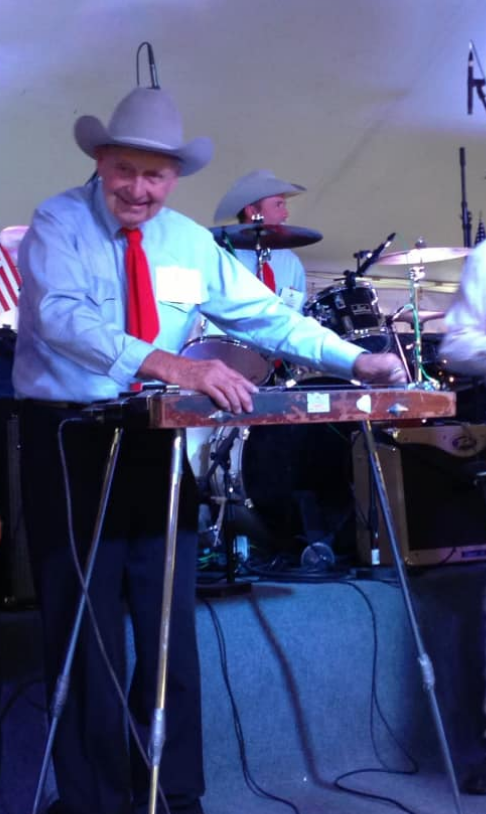 Post retirement by mid-1986 Koefer moved to Idaho to take care of his terminally ill mother. In 1989 he moved to a cabin in Bend where he resided for over 35 years. He began to reconnect with old musical friends and former fellow bandmates. Soon he was back on the circuit playing at Bob Wills music events, Texas Playboy band reunions, Western Swing Society gatherings and Hall of Fame concerts all over Texas, Oklahoma, California, and other states, plus the annual Steel Guitar Conventions in St. Louis.
Everyone was stunned at his abilities and talents which had not diminished in any way. If anything, he had actually gotten better if that were possible. One fellow musician Tom Morrell remarked that "Koefer is either an alien or a time traveler. To have come on the scene from out of nowhere as a kid in the mid-1940's, with his incredible steel guitar techniques and then just disappear 20 years later into the wilderness of Alaska for well over two and a half decades. And then return to the scene just like he stepped out of a time-warp or a spaceship with all the talent and expertise he had before, and he shows up sounding better than ever with even more technique and command of the instrument! Who does that? Only one man I know of, Mr. Bobby Koefer!"
For nearly 30 years after his return in 1989 he was on the go playing concerts with Leon Rausch & The Texas Playboys, Truitt Cunningham & San Antonio Rose Band, Billy Mize, Tommy Allsup, Dayna Wills, Tom Morrell, Johnny Gimble, Luke Wills, Eldon Shamblin and performing with many other artists including The Hot Club of Cowtown making new recordings. He was admired and respected by his steel guitar heroes as well as his peers and was a mentor and teacher to many up and comers on the instrument like steel guitarist Rose Sinclair. He was well known for his trademark quip, "You don't have to be good; you just have to sell it!"
Bobby was inducted in the Steel Guitar Hall of Fame in 2004, the Seattle based North West Western Swing Music Society Pioneers of Western Swing Hall of Fame in 1992. He was also inducted in the Sacramento Western Swing Society Hall of Fame in 1990.
Over the years Koefer had become a world traveler always seeking a new adventure whether river rafting down the Amazon or kayaking the wild Colorado, scaling the Alps or the Andes, there was always one more trek to make, a vast desert to cross or a jungle to go on safari in, another mountain to climb, or another pyramid to go see in some exotic land. Rumor has it that he actually climbed Mt. Everest - which upon being asked if it was so he never admitted it nor did he deny it.
In the last decade Koefer began to slow down due to his advanced age and a few health issues which made travel difficult. But he still retained his high energy, his positive attitude, his quick razor-sharp wit and his friendly nature right up to his final days. He was humble to a fault and always kind and considerate to those around him both near and afar. He leaves behind untold numbers of admirers of his music and good friends from all walks of life across the globe.
Mr. Koefer was preceded in death by his mother Josephine Dakin Koefer Avery (29 April 1988) and his father John Koefer (29 December 1949)
He is survived by his loving wife of 24 years Judy of Bend, OR, a son Gregg Koefer (wife Sandy) of Midlothian, TX, a daughter Tracey Hartgrave (husband Cliff) of Terrell, TX, as well as 7 grandchildren and 8 great grandchildren.
No memorial services were held or planned.
We thank Judy Koefer, Bobby's widow, for her invaluable insight and input into this account of Bobby's life and career.
Some personal notes from Michael Bates: My wife and I first saw Bobby Koefer perform with many other Texas Playboys as part of the Cherokee Strip Land Run Centennial in Ponca City, September 18, 1993. We had driven over to watch the centennial parade down Grand Avenue, and then stayed for Riders in the Sky at the restored Poncan Theater. As soon as that was over, we drove to see the Texas Playboys at the Hutchins Auditorium: Truitt Cunningham led the band that included Koefer, Luke Wills, Eldon Shamblin, Clarence Cagle, Curly Lewis, Glenn "Blub" Rhees, Bobby Boatright, and Casey Dickens. Koefer performed his wild rendition of the Hawaiian War Dance as part of the festivities. The same band made appearances that month at the Texas Playboys reunion at the Constantine Theater in Pawhuska and the Belle Starr Theater near Eufaula.
During that era and into the mid-2000s, Koefer often flew in from Oregon to join the Texas Playboys for the annual Bob Wills Birthday celebration at Cain's Ballroom. He was also a regular at the Bob Wills Day celebrations every April in Turkey, Texas. I wrote about taking my family, including our roly-poly three-month old, to see Bobby perform with the Texas Playboys in April 2006, outside the Million Dollar Elm casino in Sand Springs; in my March 2007 column previewing the Bob Wills Birthday bash at Cain's Ballroom, another item promoting the gig, and in a report following the event with line-up and set list; March 2009 Bob Wills Birthday. He was not at the the March 2010 Bob Wills Birthday at Cain's; someone connected with the band told me that, as Cain's reduced the annual birthday bash from two nights to one, it was uneconomical and a strain for Bobby to fly out from Oregon for just one performance. Bobby continued to go to Turkey every April to perform at the multi-day Bob Wills Day festivities.
Here's a playlist featuring Bobby Koefer over the years, starting with his solo on Sittin' on Top of the World, continuing with several more of the 1951 Snader Telescriptions films with Bob Wills and His Texas Playboys and yodeler Carolina Cotton, some Texas Playboys reunion performances at Pawhuska circa 2000, a couple of his infamous and hilarious renditions of the Hawaiian War Dance, one from 2001 with the San Antonio Rose band in Sacramento, one from Bob Wills Day 2011, my video of "Take Me Back to Tulsa" at the 2006 Million Dollar Elm performance, a 2006 performance of "Boot Heel Drag," and finishing with a beautiful rendition of "Sleep Walk" with Jim Paul Blair, where you get a good look at Bobby's technique. He points at the fingerboard the way Babe Ruth called his home runs.
Here's Bobby and friends in a more mellow mood, from 2002: "Stardust," kicked off by Tulsa's Mike Bennett on trumpet.
DISCOGRAPHY:
- Bobby Koefer discography, including work with Tom Morrell and the Time-Warp Top Hands
- Bobby Koefer on Bob Wills and His Texas Playboys discography
- Bobby Koefer on Pee Wee King's discography
- Bobby Koefer on Bob Newman's discography
- Bobby Koefer on Carolina Cotton's discography
- Bobby Koefer on Tom Morrell and the Time-Warp Top Hands discography
- Bobby Koefer on Leon Rausch's discography
- Bobby Koefer with former Texas Playboys on Johnny Patterson's discography
- Bobby Koefer on Brady Bowen's discography
- Bobby Koefer on Becky Kilgore's discography
The Oklahoma State House of Representatives is considering SJR 34, a resolution proposing a constitutional amendment to change Oklahoma's nominating process for state appeals courts to match the federal method: Nomination by the chief executive with the advice and consent of the legislature. This would put the entire process of choosing members of the Court of Civil Appeals, Court of Criminal Appeals, and State Supreme Court, and filling vacancies in district courts, into the hands of elected officials who are directly accountable to the voters.
The current system lacks this accountability: When a vacancy occurs, a 15-member Judicial Nominating Commission fields applications and gives the Governor three candidates to choose from. The JNC consists of six members appointed by the Governor (or the previous governor; the terms are staggered), six members elected by attorneys who are members of the Oklahoma Bar Association, one member each appointed by the President Pro Tempore of the State Senate and the Speaker of the State House, and the 15th member appointed by the other 14. The members chosen by the Governor and by the OBA come from the 1967 congressional district boundaries, notwithstanding the shifts in population (particularly the growth of the two main metro areas relative to the rest of the state) in the intervening 56 years.
Even in the selection of JNC members, the Governor's hands are tied: Only three of his six appointees may come from the same political party. No such restriction is placed on the members chosen by the private lawyers' club.
Those six members are:
District 1: Mary Quinn Cooper, McAfee & Taft, major donor to Democratic candidates such as State Rep. Suzanne Schrieber and congressional candidates Kendra Horn, Brad Carson, Kojo Asamoa-Caesar.
District 2: Weldon Stout, Jr., Muskogee, also principally a donor to Democrat candidates
District 3: James Bland, McAlester, does not show up as a political donor.
District 4: David Butler, Lawton, also principally a donor to Democrat candidates. (There is an Enid attorney with the same name, different middle initial, who is also a Democrat donor.)
District 5: Joel Hall, Oklahoma City, gave $500 20 years ago to a Republican running for Corporation Commissioner
District 6: David K. Petty, Guymon, is a consistent donor to state and national Democrat candidates, including Barack Obama, Hillary Clinton, and the DCCC and DSCC.
You must be a member of the private lawyers' club to have a vote for the only 6 seats on the commission for attorneys. In fact, you have to be a member of the private lawyers' club to practice law in Oklahoma. You may recall that in 2017, the Oklahoma Bar Association sponsored a "President's Cruise" to the oppressive, Communist island prison known as Cuba, putting cash (ultimately coming from Oklahomans unfortunate enough to interact with the judicial system) into the hands of the brutal regime that tramples on human rights and jails its dissidents.
SJR 34 passed the Senate 32-14, passed out of the House Rules Committee with a 6-3 vote, and is now waiting for a vote on the floor of the State House. There is a hitch, however: The engrossed Senate version follows the federal pattern of advice and consent from the Senate only, while the House Rules Committee substitute would require a judicial nomination to pass the House as well as the Senate. If the current House floor version passes, either the Senate would have to agree to the House version, or there would be a conference committee followed by final votes on the compromise version in each chamber.
OCPA points out:
Unlike the U.S. Constitution's checks and balances, Oklahoma Supreme Court justices are not truly selected and vetted by your elected officials.In reality, justices are selected and vetted by Oklahoma's unelected Judicial Nominating Commission, guided by a small network of lawyers from the state Bar Association.
The end result has been that Oklahoma's left-leaning Supreme Court keeps legislating from the bench and throwing out conservative reforms.
The OCPA is providing an online form to help you contact your State Representative to encourage support for SJR 34.
There may have been a day where partisan differences did not matter in the courtroom, but now partisan affiliation is predictive of differences in judicial philosophy. Republicans are the party of original intent and judicial restraint. An attorney who backs Democrats to control the Federal government is pushing for judges who will make up the rules and rewrite laws according to their ideological preferences; who will implement Lenin's "Who? Whom?" approach to justice, with a big dollop of DEI ladled on top.
If the proposed amendment is approved by the voters, the OBA could still voice their opinions of judges and justices nominated by the Governor, just as the ABA comments on Federal court nominees. While Kevin Stitt has managed some great appointments to the State Supreme Court, despite the JNC's leftist tilt, we need our elected Chief Executive to have a free hand to choose Oklahoma's version of a Clarence Thomas or Antonin Scalia, without the interference of a left-leaning private lawyers' club.
MORE: The application page has links to judicial district maps for State Supreme Court, State Court of Criminal Appeals, State Court of Civil Appeals, and District Courts.
STILL MORE: Back in January, OCPA's Ray Carter reported: "Oklahoma defies the trend noted of more conservative jurists being appointed in southern states. The median state supreme court PAJID score in Oklahoma has been between 70 and 75, reflecting a strong liberal slant, throughout almost the entirety of the 49-year period reviewed, only dipping slightly in recent years." The PAJID scores, a measure designed by researchers at Auburn University and the University of Georgia, were published in the December 2023 edition of the journal "State Politics & Policy Quarterly," a publication of the American Political Science Association.
That same OCPA report provided a more comprehensive analysis of the political contributions of JNC members since 2000:
Of the 32 individuals appointed to the JNC by the Oklahoma Bar Association from 2000 to today, 22 bar-association appointees (nearly 69 percent) have directed most of their campaign donations to Democrats, based on information obtained from public filings maintained by the Oklahoma Ethics Commission, and Federal Election Commission filings and state records that are searchable on the nonprofit Open Secrets website.Only one bar appointee to the JNC since 2000 has overwhelmingly donated to Republican candidates.
Furthermore, from 2000 to today, eight individuals who have chaired the JNC have been donors to Democratic campaigns.
In addition, Oklahoma's Judicial Nominating Commission operates without transparency. The group does not hold public meetings. The group does not interview candidates in public. And the commission does not reveal how members vote on judicial nominees. Research conducted by the 1889 Institute in 2019 found that Oklahoma's JNC is among the most secretive in the nation.
MORE: Oklahomans for Life has been calling for judicial nomination reform for many years, because leftist justices have been obstacles to the desire of a majority of Oklahomans to protect unborn children:
Please send an email to houserepub@okforlife.org to urge support for SJR 34.The Oklahoma Supreme Court has long been notoriously unsupportive of protecting the lives of unborn children. Before Roe v. Wade was overturned by the U.S. Supreme Court in 2022, the Oklahoma Supreme Court repeatedly struck down or blocked enforcement of pro-life laws which were widely viewed by others as constitutional under Roe v. Wade - laws providing reasonable regulation of abortion in ways that did not prevent abortion.
Since the U.S. Supreme Court's 2022 Dobbs decision ruled there is no so-called "right" to abortion under the U.S. Constitution, the Oklahoma Supreme Court has continued to strike down or block enforcement of newly enacted Oklahoma pro-life laws. To many observers, the actions of the Oklahoma Supreme Court majority have been arbitrary and capricious and reveal a deep pro-abortion bias.
The method of appointing Oklahoma's Supreme Court justices has been highly problematic in the eyes of pro-life Oklahomans. A committee over which the Oklahoma Bar Association exerts very heavy influence selects three nominees, and the Governor is required to pick one of the three. Given that the American Bar Association has adopted an official position in support of abortion, it is not surprising that laws protecting Oklahoma's unborn children have not found favor with our state Supreme Court.
Senate Joint Resolution (SJR) 34, pending in the Oklahoma House of Representatives, would allow the people of Oklahoma to vote on a method of selecting our Supreme Court justices which closely mirrors the federal system - nomination of a justice whom the Governor believes to be highly qualified, with confirmation by the Oklahoma legislature.
Please send one email to houserepub@okforlife.org to reach members of the Oklahoma House of Representatives and urge support for SJR 34. Ask Representatives to allow Oklahoma voters to adopt the U.S. Constitution's method of picking Supreme Court justices.
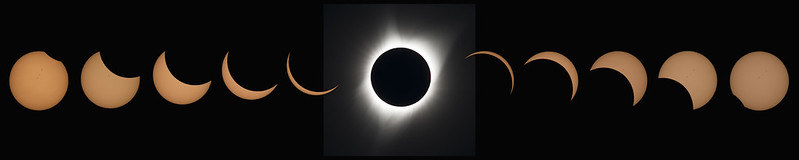
Monday, April 8, 2024, will be the nearest a total solar eclipse has come to Tulsa in my lifetime.
The path of totality stretches from south Texas to northern New England. Oklahoma southeast of a line from Antlers to Poteau will have a total eclipse, and Tulsa will reach 95%. By comparison, totality for the August 21, 2017, eclipse was about a four-hour drive away near Kansas City, and Tulsa reached 89% obscuration. Tulsa also reached 89% obscuration in the annular solar eclipse of May 12, 1994. Last October 14th's annular eclipse which crossed Texas covered 70% of the sun in Tulsa.
Monday will be the last total eclipse to cross North America until August 12, 2045, when Tulsa will be in the path of totality. There will be a partial solar eclipse covering most of North America on January 14, 2029; in Tulsa about 56% of the sun will be blocked.
If you plan to observe the eclipse here are some resources you may find helpful:
- Pivotal Weather has very useful cloud-cover forecast maps based on various weather models, zooming in on specific regions along the path of totality.
- TimeAndDate.Com interactive eclipse map: Zoom in and click on the map to get specific times (start and end of partial eclipse, start and end of total eclipse, peak), peak obscuration percentage, weather forecast, and average cloud cover since 2000.
- TimeAndDate.com comprehensive eclipse resource
- Todd Vorenkamp for B&H Photo on how to photograph a solar eclipse, including important precautions for the safety of your eyes and your camera equipment
- Reports of traffic problems before and after the 2017 eclipse offer some useful perspective
- Many cities and towns in the path of totality are offering special eclipse events; check the official website of the town where you're headed for activities of interest and useful information on parking and places for observation.
In weird news, Oklahoma City Public Schools has decided to treat students of Native American descent as ignorant, superstitious pagans:
"A lot of tribes believe it's a time of change. Some believe it's a ceremonial time. Some believe it's a natural occurrence to respect and not be outside," said Star Yellowfish, director of Native American Student Services.OKCPS is preparing its teachers, students and staff by finding alternatives for students who may have differing views of the eclipse.
"We're prepping our schools and teachers help them understand that a lot of our native students may have tribal customs and traditions that aren't in line with what the school activity is," Yellowfish explained.
The district is home to over 2,600 Native American students, with nearly 80 tribes represented. Each culture has differing values.
"There's all these different tribes that have all these different customs, and really we just want teachers to know who are your native students, what are they going to do during the eclipse, to notify their parents what their activities will be so they can decide if they want their kid involved or not," Yellowfish said.
OKCPS has sent an informative letter to teachers as a way to talk to their students as they get ready for Monday's eclipse.
"We want to make sure those native students have a fun place to go if they're not supposed to be outside, or if their families feel like they need to be kept home that they get an excused absence," Yellowfish stated.
For the students who will be in attendance, the district will provide safe spaces to pray, meditate or practice stillness.
Star Yellowfish (wasn't that the name of a Dr. Seuss character?) might be interested to know that the vast majority of Oklahomans who identify as American Indian also identify as Christian. They understand as well as non-Indian Christians that God has established an order in the heavens that can be studied and predicted, setting the celestial bodies in their courses and establishing the laws of motion, and that the timing and extent of a solar eclipse is a function of geometry and physics, something that can be calculated centuries and millennia in advance.
Only around 240 solar eclipses of any sort occur in any given century, where the moon crosses the earth's orbit around the sun and the alignment occurs over the part of the earth that is in daylight at the time. Recall that 70% of the earth's surface is water, plus there are uninhabited regions like Antarctica, and the earth's population was much smaller in ancient times. There was a very small likelihood that any given person, living out his life within a short distance of his birthplace, would witness a significant solar eclipse. According to TimeAndDate.com, it takes about 375 years for a total solar eclipse to happen again at the same location. Partial eclipses are visible at any given place every 2.5 years (more frequently the closer you are to the poles), but most of these must be a very low percentage of obscuration.
It's telling that Yellowfish is so vague with her claims -- "a lot of tribes." Surely the director of Native American Student Services for Oklahoma City Public Schools should have examples of specific tribal beliefs and practices involving eclipses. A significantly noticeable solar eclipse would be a rare event for any given location. How would these tribes have known to "stay inside" if they didn't have the mathematical and scientific knowledge to predict an eclipse?
I'm reminded of Mark Twain's book A Connecticut Yankee in King Arthur's Court where a man from the 20th century finds himself in Arthur's Britain, and uses his historical knowledge of a solar eclipse to impress the Britons and gain power. In 1504, Christopher Columbus, shipwrecked on Jamaica, used an almanac's accurate prediction of a lunar eclipse to gain better treatment from the natives.
My Celtic ancestors were delivered from paganism by the Gospel in the 5th and 6th centuries, thanks to Patrick and Columba, my English ancestors in the 7th century, thanks to Augustine of Canterbury, my German ancestors in the 8th century, thanks to Boniface (and his axe). In the 17th century the Gospel came to the native peoples of North America, and they turned to follow Jesus, translating the Bible into their own languages. The aboriginal peoples of North America also embraced the practices of civilization that they observed in the new European arrivals, learning to farm, developing systems of writing, building permanent settlements with permanent structures, establishing institutions of common and higher education, holding to their own cultural traditions while learning to succeed as part of the majority American culture. To this day, people of aboriginal American descent make use of the advances of science in medicine, transportation, illumination, computing, personal comfort, and, of course, slot machines. Every culture had pre-scientific myths about what they saw in the skies: No reason to be embarrassed about them, but also no reason to pretend that they usefully model reality.
KOCO's Facebook post about this story drew a pile of AWFLs and pretendians joining OKCPS in their virtue-signalling. The only specific tribal belief anyone could cite was a 2017 statement from the Navajo nation claiming that their practice was ever and always to stay indoors and fast, because the moon is having intercourse with the sun. Given the short duration of eclipses, fasting doesn't seem like much of a sacrifice. I have my doubts that ancient people would have understood that an eclipse was caused by the moon; the new moon wouldn't be visible in the sky until it begins to cover part of the sun. During the 2023 annular eclipse, the Navajo banned visitors to Monument Valley. I have a feeling that this "tradition" suddenly emerged in modern times. A quick newspapers.com didn't turn up any references to Navajo eclipse tradition in Arizona papers before 2017.
The 2017 Navajo statement reads less like an account of historical practice and more like rabbinical guidance offered to the anxiously observant, applying traditional practices connected with death and birth to novel circumstances (the "death" and "rebirth" of the sun). There is a hint here that this tradition was manufactured in response to demand:
Our office has been bombarded with phone calls and emails, asking and requesting that the Diné Institute post some teachings and general advisement for anyone who may have questions and seek advisement on the correct way to observe the Solar Eclipse, which is set to occur on, Monday, August 21, 2017.
Without the ability to predict an eclipse, a culture could only react to its surprising onset, perhaps by making loud noises to drive away the big black squirrel or frog trying to eat the sun.
What seems to be driving this is a push throughout the Anglosphere to separate people of aboriginal descent from the rest of society. This is a crucial element of the project to use aboriginal people to bypass democratic control of government. (This process is much further along in New Zealand, but a push in this direction in Australia was rebuffed.) People of aboriginal descent must be seen and must see themselves as other, separate from and spiritually superior to the majority population, with special needs and special perspectives in conflict with those of the majority, and special sensitivities that must be honored. (In New Zealand, for example, Maori taboos justify banning non-Maori from certain beaches.) This in turn justifies two systems of justice, dual sovereignty, and co-governance, where the "representatives" of the minority of people who have aboriginal descent have a veto over the decisions of the elected representatives of all the people.
Historically, this way of thinking is alien to Oklahoma, where the policy of allotment and full citizenship before statehood allowed people of American Indian heritage full participation in the economic, political, and cultural development of the state, where people with and without tribal citizenship live in the same neighborhoods, send their children to the same schools, worship at the same churches, work at the same jobs, and marry one another. Many (perhaps the vast majority of) tribal citizens have minuscule blood quanta and whatever attachment they may have to tribal tradition was acquired by personal study rather than handed down through the generations. Unless we want our state to be ruled by unaccountable authority, we need to push back against narratives of division and alienation and affirm our common interests while celebrating the distinctive traditions of our ancestors. Ancient explanatory myths for an eclipse may give us a glimpse of our ancestors' understanding of the world, and they may amuse us, but we wouldn't employ them as scientific facts.
Meanwhile, some Christians are wondering if the eclipse, or the crossing of this eclipse's path with that of the 2017 eclipse (almost 7 years ago), is a sign of the End Times. Atlas Obscura offers a map of all total eclipses from 2000 to 2025 showing that it's a common thing for eclipse paths to cross, although most of the time it happens over the 70% of the earth's surface that is water. The strong earthquake that hit New Jersey Thursday morning and the expected abundance of cicadas this year are mentioned as "signs" in connection with the eclipse.
For Bible-believing Christians, the darkening of the sun could be a prompt to remember God's 9th plague upon Egypt, where a thick darkness engulfed the Egyptians for three days while the Israelites enjoyed sunlight, a plague echoed in the fifth bowl of God's wrath in Revelation 16. The plagues can be read as the One True God announcing his triumph over the idols of the Egyptians. They might think on the prophecy of Joel, quoted by Peter on Pentecost:
I will show wonders in the heavens
and on the earth,
blood and fire and billows of smoke.
The sun will be turned to darkness
and the moon to blood
before the coming of the great and dreadful day of the Lord.
And everyone who calls
on the name of the Lord will be saved.
Here in Eastertide, the eclipse should bring to mind the darkness that fell over the land for three hours as Jesus was dying on the cross to pay the penalty for our sins.
If you want something profound and religious to do when you witness a total eclipse, you could recite scripture and prayers for the occasion.
I gather that Jewish scholars historically regarded a solar eclipse as an ill omen, and that no blessing was to be recited. But this article mentions a respected Lithuanian rabbi who witnessed an eclipse in 1922 and "declared that it's a mitzvah [a righteous deed] to watch the eclipse to see how the sun is a creation and not a creator, how HaShem [the Lord] smites the Avodos Zarah [strange worship, idolatry]."
This inspired a Jewish layman to suggest it would be appropriate after the end of totality to recite the first six verses of Psalm 148 ("Praise ye him, sun and moon: praise him, all ye stars of light."), Psalm 121 ("The sun shall not smite thee by day, nor the moon by night."), and Psalm 150 ("Praise ye the LORD. Praise God in his sanctuary: praise him in the firmament of his power."), followed by this blessing, Yotzer Or (Creator of light):
Blessed are You, Adonai our God, Ruler of the universe, Creator of light and darkness, Who makes peace and fashions all things. In mercy do You give light to the earth and to all who dwell upon it, and in Your goodness do you renew every day, continuously, the work of Creation. How great are Your works, Adonai! In wisdom you made them all, filling the earth with your creatures. The Ruler Who alone was exalted before Creation, Who has been praised, glorified and raised on high since ancient days, Eternal God, in Your abundant mercies, have mercy upon us. Our powerful God, our rock-like fortress, our shield of redemption, be a stronghold for us! Blessed God, great in knowledge, prepared and formed the rays of the sun. The beneficent One created honor for God's Name, and placed luminaries around God's might. The heads of God's legions, holy ones, exalters of the Almighty, are always relating the honor of God and God's holiness. May You be blessed, Adonai our God, beyond the praises of Your handiwork and beyond the brightness of the luminaries that You created--may they glorify You!May You shine a new light on Zion, and may we all soon be worthy of its radiance.
Blessed are You, Adonai, Creator of the heavenly lights.
Or as a simple thanks for the opportunity to see such a marvel, you could say the Shehecheyanu:
Blessed are You, L-rd our G-d, King of the Universe, who has granted us life, sustained us and enabled us to reach this occasion.
The Oklahoma Statewide Virtual Charter School Board has authorized an explicitly Roman Catholic virtual charter school, St. Isidore of Seville Catholic Virtual School, to begin operation in the 2024-2025 school year. Attorney General Gentner Drummond, a pretend-conservative and Biden for President donor who won the GOP nomination with the help of dark-money ads, is suing to block the school, working against the interests of parents who might wish to avail their children of such an education. The case is before the Oklahoma Supreme Court. The Alliance Defending Freedom is representing St. Isidore. ADF's argument has some interesting implications (emphasis added):
Phil Sechler, senior counsel at Alliance Defending Freedom (ADF), represented St. Isidore before the Oklahoma Supreme Court and argued St. Isidore does not violate the First Amendment.He noted the group is privately owned and operated and said receiving a charter contract did not make the group a state actor.
Sechler cited Rendell-Baker v. Kohn, a U.S. Supreme Court decision from 1982, which found a private school wasn't a state actor even if "substantially funded and regulated by the state."
According to state law, public schools are defined as "all free schools supported by public taxation" and aren't inherently state actors, Sechler continued.
Rather than being an "establishment of religion," St. Isidore is merely exercising its right to religious freedom by participating in the state's charter school program - a benefit which many secular groups also receive.
Charter schools are classified as public schools by the SDE and are subject to many of the same state laws that apply to traditional public schools. I've suspected, but haven't dug into the matter, that many of these provisions were insisted upon by legislators who really didn't want to see charter schools succeed as an alternative to traditional public schools.
It seems to me (and I am speaking only as an individual, not on behalf of any board or organization of which I am a member) that a charter school's function is more akin to a company that has a contract to provide services to or on behalf of state government. We wouldn't think of Flintco or Cox Communications as state actors because they build state facilities or provide internet service to the state.
The Oklahoma Department of Human Services refugee assistance program is directly relevant to the virtual charter school question, with the state working through private Christian non-profits to provide state-funded services:
The program provides both cash and medical assistance.Cash is provided through Oklahoma Catholic Charities.
Medical Assistance is provide through the Soonercare (Medicaid) Program.The Oklahoma Department of Human Services (DHS) contracts with Catholic Charities of Oklahoma City and the Young Women's Christian Association (YWCA) of Tulsa to provide assistance to newly arrived refugees. This appendix gives information on what services are provided by whom in different parts of the state.
No one would expect Catholic Charities or the YWCA to comply with the Open Meetings and Open Records acts, nor think of them as state actors, nor would we expect them to deny the Christian aspect of their work which is right there in the name.
It's worth remembering that the First Amendment to the Constitution prohibited Congress from making any law "respecting an establishment of religion or prohibiting the free exercise thereof." That stops the Federal Government from creating an official national religion along the lines of the Church of England or the Church of Scotland, but it did not prevent the states from funding religion (Massachusetts did not disestablish its state church until 1833) much less require state hostility to religion.
This case will be interesting to watch.
RELATED: Daniel Dreisbach, a professor at American University in Washington, D.C., in the Department of Justice, Law & Criminology, is a specialist in the interaction of state and federal government with religion during the Founding Era. Prof. Dreisbach's Twitter/X feed features quotes from and links to original documents on the topic. For example, he presents a proclamation from 1792, from Josiah Bartlett, President of New Hampshire, calling for a day of humiliation, fasting, and prayer, that "Ministers and People of all denominations... to confess before God their aggravated transgressions, and to implore his pardon and forgiveness through the merits and mediation of Jesus Christ." Dreisbach is author of Reading the Bible with the Founding Fathers (Oxford, 2017) and Thomas Jefferson and the Wall of Separation between Church and State (NYU Press, 2002). Dreisbach has written for Law and Liberty, The Public Discourse, the C. S. Lewis Institute, Mosaic, and the Federalist. C-SPAN has video of several speeches and forums where Prof. Dreisbach discusses religion and the American Founding.
Originally posted 2024/03/20. Post-dated to stay at the top of the blog through election day
UPDATE 2024/03/26: Tulsa County Election Board has moved Thursday and Friday early voting back to their headquarters at 555 N. Denver. (Earlier information on the state election board website reported that Fair Meadows would be used again, as it had been for the March 5 presidential preference primary.)
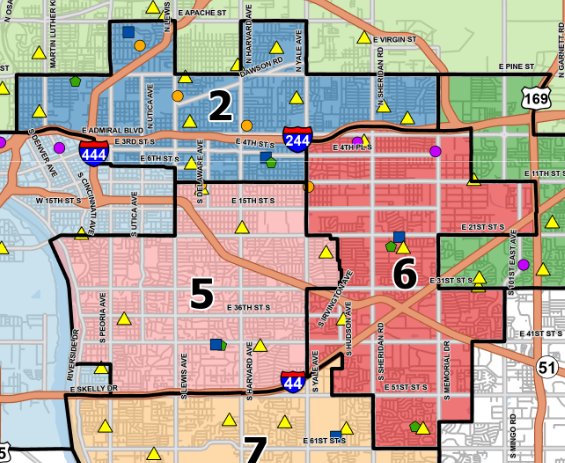
If you live in central Tulsa, between Pine and 51st Street, between the river and Memorial Drive, there's a good chance you have the opportunity to change the direction of Tulsa Public Schools in the April 2, 2024, election. There are three contested seats on the ballot, a regular election where a veteran teacher is challenging an incumbent school board member, a regular election for an open seat, and a special election to fill a vacancy.
Over 68,000 people in a wide swath of central Tulsa (districts 2, 5, 6 in the map below) are eligible to vote. Incumbent John Croisant in District 5 hopes to be re-elected and joined by Calvin Moniz (District 2) and Sarah Smith (District 6) to continue to rubber-stamp an administration that has failed to educate our city's children and to continue to turn a blind eye to administrative incompetence, corruption, and bloat. Campaign ethics filings show that all three are backed by major Democrat donors, "progressive" Democrat elected officials, and an official Democrat party organization, and all three use Democrat campaign vendors. Some of their big donors are connected with the big foundations who treat TPS school children as their experimental lab rats.
Their opponents are KanDee Washington (District 2), involved in the schools for many years as a TPS parent, Teresa Pena (District 5), a veteran TPS teacher, and Maria Seidler (District 6), an attorney who represents parents in their dealings with the public schools. These three women represent a diversity of life experience, but all three are united in support of genuine education and an end to excuses for incompetence, corruption, and bloat.
Recent news stories about failing schools and illegal payments to TPS administrators underscore the imperative that Tulsa school district voters step up and elect board members who will right the ship.
The TPS Rescue Coalition has rated candidates in each of the three races based on an Independence Scorecard: Is the candidate beholden to special interests -- the same ones that have run TPS into the ground, to the benefit of consultants and philanthropocrats who see Tulsa as their personal social experiment -- or independent and focused on the best for students, teachers, and parents? Based on that information, and based on the responses 4 of the 6 candidates provided in the NorthStar questionnaire, I'm making the following recommendations:
District 2: KanDee Washington
District 5: Teresa Pena
District 6: Maria Seidler
I hope to say more about each race in the next few days.
All three election districts are fully within Tulsa County. Early voting will be held at the Tulsa County Election Board Headquarters at 555 N. Denver, but only on Thursday, March 28, 2024, and Friday, March 29, 2024, from 8:00 a.m. to 6:00 p.m. (No Saturday early voting because this is not a federal election.)
To confirm which district you're in and where your polling place is, use the Oklahoma Voter Portal at okvoterportal.okelections.us
MORE:
Here is the full map of TPS board election districts, as of the post-2020-census redistricting.
Tulsa Parents Voice Facebook page is a great place to keep up with the developing story of illegal payments to TPS administrators.
Monday, March 25, 2024, was the deadline for candidates for school board in the April 2 election to file their pre-election contributions and expenditures report with the clerk of Tulsa Public Schools. While the Tulsa City Clerk automatically posts received ethics reports, the school board clerk does not do this. One must file an Open Records Request through the tulsaschools.org website and then hope for a timely response. My request was filed on Monday, March 25, 2024, at 11:43 a.m.:
Records requestedAll campaign ethics reports filed by Candidate Committees from March 31, 2023, to the present, to include:
* Statements of Organization
* Contributions and Expenditures Quarterly Reports
* Contributions and Expenditures Pre-Election Reports
* Continuing Reports of ContributionsAll campaign ethics reports filed by Political Committees from March 31, 2023, to the present, to include:
* Statements of Organization
* Contributions and Expenditures Quarterly Reports
* Electioneering Communications and Independent Expenditures ReportReason for the request
For a published report to voters and the general public in advance of the April 2 election. Because early voting begins on March 28, it is essential to have these records no later than close of business March 26. PDFs by email are preferred.
I received an automated acknowledgement but no further communication. I sent a follow up email to TPS Clerk Sarah Bozone on Thursday, March 28, at 3:28 p.m.
Dear Ms. Bozone:I have yet to receive a reply to a time-sensitive open records request for pre-election campaign filings. Attached below is the automated acknowledgement of my request from Monday.
State law establishes a deadline of 8 days before an election for filing reports of campaign contributions and expenditures. This deadline exists so that voters inform themselves about the people and organizations seeking to influence an election. Failure to make these filings readily available to public scrutiny may be interpreted as bad faith on the part of TPS administration. Early voting is already underway.
Thank you,
Michael Bates
BatesLine.com
I received a reply with the requested information later that day at 8:24 p.m., with an 18.7 MB zip file attached.
The zip file contained one PDF for each candidate in Tuesday's election. There were no reports for Political Committees. I ran each PDF through optical character recognition and optimization. John Croisant's filing is large, because it was filled in sloppily in almost illegible handwriting. Below you will find the original zip file, unmodified, followed by the OCRed and optimized PDFs:
- Original zip file of campaign reports for 2024 Tulsa Public Schools board candidates in response to open records request
- District 2: Calvin Moniz (I) campaign contribution and expenditure reports
- District 2: KanDee Washington (I) campaign committee statement of organization. (She did not file a contribution and expenditure report, possibly an indication of not raising or spending more than the minimum threshold.)
- District 5: John Croisant (D, incumbent) campaign contribution and expenditure reports
- District 5: Teresa Peña (R) campaign contribution and expenditure reports
- District 6: Maria Seidler (R) campaign contribution and expenditure reports
- District 6: Sarah Smith (D) campaign contribution and expenditure reports
I have not had the opportunity, and I don't have time right now, to do a full analysis. I did notice that the insider candidates -- Croisant, Moniz, Smith -- are much better funded than the grassroots candidates, that each are using Democrat fundraising systems (ActBlue), Democrat consultants (Little Giant), and have received hefty donations from big Democrat donors. If someone feels like transcribing Croisant's reports or organizing the contributions in descending order of amount, or if you just notice something interesting, you can email your findings to blog at batesline dot com. I may post some of that here and will give you credit (unless you would prefer to be anonymous).
Major and noteworthy donors:
Calvin Moniz, District 2, establishment: major donor to Democrats George Krumme, $3,300; philanthropocrat Lynn Schusterman, $2,900; Carolyn Wheeler, $1,000; major donor to Democrats and polo player Reed Oppenheimer, $1,000; developer John Bumgarner, $250; former Democrat mayor Kathy Taylor, $250; Chapter of the Oklahoma Federation of Democratic Women, $250. (Moniz filed only the schedules, but not the required reports which summarize receipts and expenditures.)
John Croisant, District 5, establishment: Major donor to Democrats Burt Holmes, $3,300; major donor to Democrats George Krumme, $3,300; philanthropocrat Lynn Schusterman, $2,900; Steve Mitchell, CEO of Argonaut Private Equity (George Kaiser's private equity firm), $1,000; former Tulsa World publisher Robert and Roxana Lorton, $1,000; former Democrat mayor Susan Savage, $750; former Democrat State Rep. Judy Eason McIntire, $600; American Federation of Teachers Oklahoma (union), $500; Tulsa Chapter of the Oklahoma Federation of Democratic Women (Heart of the Party), $250; developer Bruce Bolzle, $250; former Democrat county chairman and congressional candidate Tim Gilpin, $250; Educare executive director Cindy Decker, $250; Democrat state representative John Waldron, $100.
Teresa Peña, District 5, reform: Alan Staab, $3,300; Fran Fleming, $3,300; Republican state representative Mark Tedford, $500; former Republican Oklahoma Attorney General John O'Connor, $250; former Republican state representative Carol Bush, $100;
Sarah Smith, District 6, establishment: Major donor to Democrats Burt Holmes, $3,300; Ross Swimmer, $3,300; major donor to Democrats George Krumme, $3,300; philanthropocrat Lynn Schusterman, $2,900; George Kaiser-affiliated attorney Frederic Dorwart, $1,000; major donor to Democrats and polo player Reed Oppenheimer, $1,000; former Democrat county chairman Keith McArtor, $500; former Democrat State Rep. Judy Eason McIntire, $500; Tulsa Forward PAC, $250; Democrat state representative Suzanne Schreiber, $250; former Democrat mayor Kathy Taylor, $250; developer John Bumgarner, $250; Tulsa Chapter of the Oklahoma Federation of Democratic Women (Heart of the Party), $250; Schusterman Interests program officer Randee Charney, $250; former Democrat congressional candidate Doug Dodd, $250.
Maria Seidler, District 6, reform: Christie Glesener, $3,250; Dan Hicks, $1,365. (Both of these were in-kind contributions of campaign mailers.)
Significant expenditures:
Calvin Moniz, District 2, establishment: Little Giant Consulting, $6,000; DemLaunch (campaign lists), $76.37; Gibson Universal LLC (campaign mailings), Henrico VA, $2,745.13; ActBlue (fundraising platform), $131.03.
John Croisant, District 5, establishment: Camelot Consulting (retainer, mail, digital ads) $26,110.24; Little Giant Consulting; Hardesty Press.
Teresa Peña, District 5, reform: Marcus & Company (campaign consulting), $5,620; Phame Marketing (billboard), $4,200; Tulsa Direct Mail, $3,836.41; Edge One Signs (yard signs), $1,115.31.
Sarah Smith, District 6, establishment: Calculated Strategies (campaign services compliance reporting), Bethany, OK, $4,450; Little Giant Consulting (fundraising service), $4,000; A. R. Clinton (campaign management), $1,500; Signs on the Cheap, Austin TX, $1,450.21; ActBlue (fundraising platform), $659.14.
Previous items on the 2024 Tulsa school board election:
- Links to 2024 Tulsa school board candidate websites and social media profiles
- Overview of 2024 Tulsa school board election with map of districts and recommendations
- ACTION Tulsa, the Alinskyite-leftist organization seeking to influence the election under a non-partisan guise
On Twitter (X), a random reply from a "Progressive Democrat, native born Oklahoman. ELCA Lutheran" condemned my endorsement of KanDee Washington in the Tulsa Public Schools District 2 election, because she didn't attend ACTION Tulsa's "Accountability Session":
KanDee Washington is the only candidate not to accept ACTION Tulsa's invitation to it's Accountability Session. What does she have to hide. The other two candidates you support showed at the session that they are wrong for TPS.
Who is ACTION Tulsa and why is it a good thing for a school board candidate to disagree with them?
ACTION stands for Allied Communities of Tulsa Inspiring Our Neighborhoods. The website lists the following member institutions, most of which are left-wing "churches," which long ago abandoned a Biblical worldview and Biblical standards of morality.
- All Souls Unitarian Church
- Church of the Restoration Unitarian Universalist
- Church of St. Mary - Outreach Program
- Dan Allen Center for Social Justice
- Fellowship Congregational United Church of Christ
- Hope Unitarian Church
- Kansas Oklahoma Conference - United Church of Christ
- Saint Aidan's Episcopal Church
- St. Francis Xavier Catholic Church
- Together Oklahoma
- Tulsa Lutherans in Action
- ACTION United Tenants of Tulsa
Together Oklahoma is another innocuously named left-wing group, a branch of Oklahoma Policy Institute, a big-government and higher-taxes think tank. Tulsa Lutherans in Action is connected with Fellowship Lutheran Church, a congregation of the liberal ELCA, another shrinking mainline denomination that has abandoned its commitment to Biblical truth.
ACTION Tulsa is an affiliate of the Industrial Areas Foundation (IAF), which was founded in 1940 by Saul Alinsky, notorious for his book Rules for Radicals, which was formative in the community organizing career of Barack Obama.
Shamefully, mainstream media reports on the "Accountability Session" held on January 27 ignored these radical leftist connections and took at face value ACTION Tulsa's claims to be "non-partisan" and just concerned about good schools. The Facebook event posting says that the group "will ask candidates to make public commitments to work with us on specific, actionable requests" but that list of requests does not appear anywhere on their website or Facebook page. ACTION Tulsa wants pledges of obedience but doesn't want public scrutiny of its agenda.
Groups like ACTION Tulsa hide behind neutral language because they know their true aims and values would be rejected by the voters. It's a badge of honor that KanDee Washington had the sense not to show up to their accountability session and that Teresa Pena and Maria Seidler were willing to voice their dissent from ACTION Tulsa's agenda.
UPDATE: I was sent a copy of ACTION Tulsa's demands (ACTION TPS Acountability Session Candidate Packet FINAL.pdf). It's a nice touch to misspell accountability.
As we have indicated previously, ACTION leaders will ask you to respond to the ACTION Agenda of Issues which we have developed through meetings in the community. We organize within institutions to develop an agenda of issues and work to ensure political capacity is marshaled to successfully resolve community concerns. At this session the organization will launch its nonpartisan GOTV efforts....
There were 5 questions, and candidates were told to give only Yes or No answers. They were limited to 3 minutes and 15 seconds total to cover all five answers. This was not an invitation to discuss weigh one priority against another, to discuss the costs and benefits of any particular policy. ACTION Tulsa was asking one question of each candidate: Will you be our female dog? Croisant, Moniz, and Smith all answered, "Yes!"
Conservative candidates would be wise to refuse any involvement with this group.
Published February 29, 2024. Postdated to keep it at the top of the page until the polls close.
Tuesday, March 5, 2024, is Oklahoma's presidential primary. On election day, polls are open from 7:00 a.m. to 7:00 p.m. You'll be able to cast an early ballot at one or more locations in each county at the following times, which includes Saturday as it's a federal election:
- Thursday, February 29, 2024: 8:00 a.m. to 6:00 p.m.
- Friday, March 1, 2024: 8:00 a.m. to 6:00 p.m.
- Saturday, March 2, 2024: 8:00 a.m. to 2:00 p.m.
Tulsa County will have early voting at Fair Meadows, 4609 E. 21st Street. This is a brand new location for early voting. Wagoner County, which will be voting on eight propositions affecting a total of 1.8 cents in county sales tax as well as a 5% lodging tax, has two early-voting locations: NSU Broken Arrow Campus, 3100 E New Orleans St., and First Baptist Church, Wagoner, 401 NE 2nd Street.
If you need help finding your polling place, or if you'd like to study a sample ballot before you go, the Oklahoma State Election Board has a one-stop-shop online voter tool. Put in your name and date of birth, and they'll look you up in the database, find your polling place and show you a photo of it and a map, will let you see a printable sample ballot, and, if you're voting absentee, it will show you when your ballot arrived at your county election board. Many precinct boundaries have changed since the last presidential cycle, and precinct locations may have changed very recently, so double-check before you head for the polls, and don't forget to bring your photo ID.
The presidential preference primary is the only thing on the ballot in Tulsa County. Republicans, Democrats, and Libertarians all have a presidential primary, and Democrats have invited independent voters to vote in their primary.
By party in order of filing:
Republican:
- Donald J. Trump, 77, Palm Beach, FL, former President
- Nikki Haley, 51, Kiawah Island, SC, former Governor of South Carolina and Ambassador to the United Nations
- Ron DeSantis, 45, Tallahassee, FL, Governor of Florida and former congressman
- Chris Christie, 61, Mendham, NJ, former Governor of New Jersey
- Ryan L. Binkley, 56, Dallas, TX, pastor and entrepreneur
- David Stuckenberg, 42, Tampa, FL, founder and CEO of tech company
- Asa Hutchinson, 73, Rogers, AR, former Governor of Arkansas
- Vivek Ramaswamy, 38, Columbus, OH, pharmaceutical company founder
Democrat:
- Dean Phillips, 54, Wayzata, MN, congressman
- Joseph R Biden Jr, 81, Wilmington, DE, current resident of the White House
- Armando Mando Perez-Serrato, 47, Orange, CA. Mando doesn't say much about himself, but has strong opinions about his Democratic opponents.
- Marianne Williamson, 71, Washington, DC, novelist
- Stephen Lyons, 62, Damascus, MD, plumbing company owner
- Cenk Uygur, 53, Los Angeles, CA, blogger and podcaster
Libertarian:
Jacob Hornberger, 73, Broadlands, VA, lawyer, president of the Future of Freedom Foundation
Chase Oliver, 38, Atlanta, GA, self-described activist
Joseph "Joe Exotic Tiger King" Maldonado is running for president as a Democrat from federal prison in Texas, but he is not on the Oklahoma ballot.
The Green Papers has the nitty-gritty of delegate allocation rules for Oklahoma Republicans and Democrats. In a nutshell, Democrat delegates are allocated proportionally for each congressional district and statewide, but a candidate must have at least 15% of the vote to receive any delegates. Republicans use a semi-proportional method in each congressional district (3 delegates each): If a candidate gets more than 50% of the vote, he gets all the delegates in that jurisdiction. If two candidates get more than 15%, the one with the most votes gets 2 delegates and 2nd place gets 1. If three candidates get more than 15% all three get a delegate. The 28 statewide at-large delegates are allocated proportionally among candidates who have at least 15% of the vote, but if any candidate gets more than 15% of the vote, he gets all 28. It's possible, if a big enough proportion of the vote goes to candidates with less than 15% of the vote, for some number of uncommitted delegates to be allocated.
I will be voting for Florida Gov. Ron DeSantis in the Republican presidential primary. More about that in another entry. I encourage Wagoner County voters to defeat the eight tax proposals on their ballot and demand that their county commissioners consult with the public before putting a massive tax increase on the ballot.
 In my pre-presidential primary post, I provide a detailed explanation of the delegate allocation process for Oklahoma. As I mentioned in the same post, I am voting for Florida Governor Ron DeSantis in the 2024 Oklahoma Republican Primary.
A BatesLine reader asked me why the names of so many candidates are still going to be on the ballot, even though some dropped out weeks ago. The ballot was set in stone shortly after the end of the filing period in early December. It takes time to design and print ballots and to program ballot scanners to correctly tabulate that ballot design. Absentee ballots have to go out early, particularly for Oklahomans serving in the military. There's no time to reprint ballots. Ever year we've had a presidential primary, we've had no-longer active candidates on the ballot, and we often have barely- or never-active candidates running for city, county, and state offices. Even if a candidate isn't sending mail pieces or doing robocalls, you're still allowed to vote for him or her.
You might think that all this is moot. We appear to be headed for a Trump-Biden rematch. All but three of the Republican candidates (Trump, Haley, Stuckenburg) have suspended their campaigns. There hasn't been a serious primary challenge to an incumbent president since 1992, and only in the unusual circumstances of 1976, with an unelected incumbent, did a challenge have a real shot at succeeding. The Oklahoma County Republican Party is hosting an Official Trump Victory Party tomorrow night, a significant departure from the mandatory neutrality expected of party organizations during an active primary campaign.
But in the grand sweep of American history, the idea that you must actively campaign for president is a relative novelty. In 1952, within living memory, Dwight D. Eisenhower didn't give his first campaign speech until June 4, after the last primary had already been held. Eisenhower couldn't engage in partisan political activity until then; he was still on active duty as commander of NATO forces in Europe until May 31.
Democratic Party rule changes after 1968 began the movement toward binding primaries that put a premium on expensive mass media spending, but it wasn't until the advent of Super Tuesday in 1988 that the weight of the nominating process shifted definitively from caucuses and conventions to primaries. It was not unreasonable, as recently as 1968, for the incumbent president not to bother filing for primaries or to actively campaign.
Recently, Tara Ross wrote of the reluctance with which George Washington accepted his election to the presidency. Electors were elected in some states by popular vote and were appointed by the legislature in others, and each elector, at that time, cast two ballots. Every elector cast one of his ballots for Washington, with John Adams winning a majority of the remaining ballots, scattered among 11 candidates. None of the candidates actively campaigned for office. Electors cast their ballots for Washington not knowing if he would accept.
The vision of the Framers of the Constitution was that citizens would choose a trusted and knowledgeable neighbor from their city or region to represent them in the Electoral College, and that electors from each state would deliberate and cast ballots for the public servant best equipped to head serve as Chief Executive of the federal government. No campaigning would be necessary, because the electors would have the solemn obligation and privilege to research possible candidates, their successes and failures, their strengths and flaws. Ideally, ambition-driven campaigning would be viewed as unseemly and disqualifying.
But now presidential candidates must raise tens of millions of dollars and begin campaign efforts as soon as the midterm elections are over. To win the nomination, you must win primaries, which means you must reach a vast number of primary voters who are barely paying attention, and to get their attention you need money for TV ads, direct mail, robocalls and robotexts, and people to manage all of that, plus the ground game. Underperforming expectations in an early state means the money dries up; donors are no longer willing to invest in your future prospects.
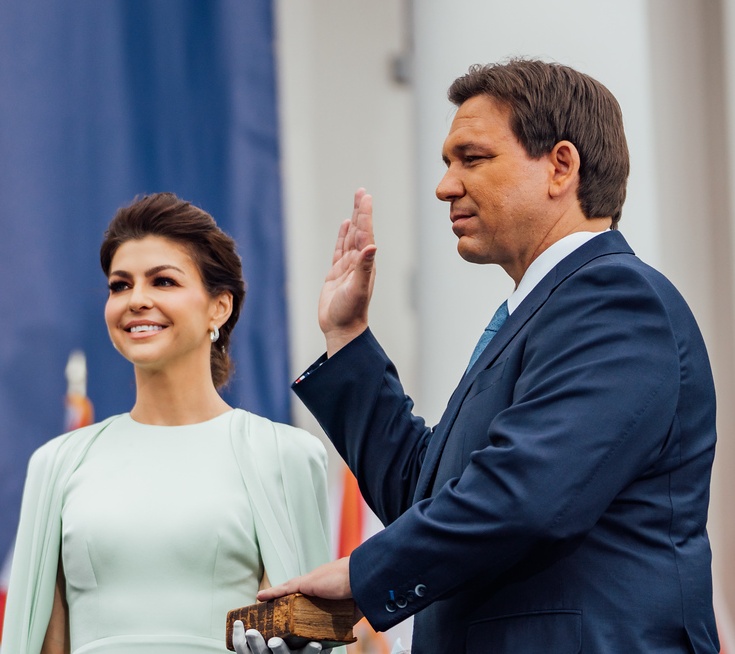 In 2022, Florida Gov. Ron DeSantis managed to win re-election by 20 percentage points in what had been a purple state (remember 2000?), while the expected "Red Wave" failed to materialize anywhere else. DeSantis used his power as governor effectively to accomplish a conservative agenda, removing two Soros-backed district attorneys who refused to prosecute crimes, dismantling DEI bureaucracies at the state's universities, re-creating the state's New College as a classical liberal arts college with a governing board filled with conservative thinkers like anti-woke campaigner Christopher Rufo, and defied the mighty Disney Corporation. While Trump was celebrating the vaccine he fast-tracked, DeSantis's appointed state Surgeon General, Dr. Joseph Ladapo, issued a caution for young men because of a higher risk of heart-related adverse effects.
At the heart of all of these DeSantis successes was a focus on results: understanding and wielding the authority that the voters had granted him to accomplish the priorities that he had promised the voters, hiring and appointing people with the intelligence, diligence, and character to accomplish the goals he set. You do not hear DeSantis or his fans making excuses for failure, mainly because he hasn't had many failures; DeSantis just gets things done.
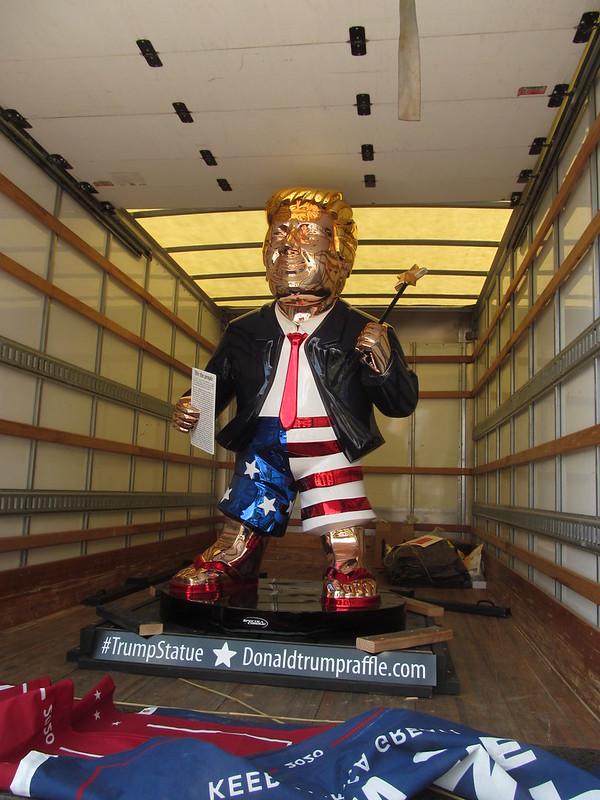 DeSantis's polling lead began to disappear as partisan prosecutors began filing case after case attempting to put former president Donald Trump in prison or at least off of the ballot. Understandably but mistakenly, many Republican voters felt that the only way to defy politically motivated misuses of the justice system was to rally behind Trump. Trump and his allies attacked DeSantis's admirable record, minimizing his achievements and even making wild and ridiculous false claims (e.g., the guy who ousted two Soros DAs is somehow Soros's puppet). Trump ran to DeSantis's left on abortion, transgenderism, and woke Disney.
Trump and his followers asserted that Trump did not need to earn the 2024 GOP nomination but was owed it. DeSantis was accused of what seems to be the greatest crime in the opinion of too many: Being disloyal to Trump. To these people, it doesn't matter who would be the most effective Republican nominee and conservative chief executive: Loyalty, not to principle, not even to a party, but to one man, is the supreme virtue and disloyalty the unforgivable sin.
I rarely take time to watch movies -- I tend to unwind with a classic sitcom episode -- but a couple of months ago during a business trip, I took the time to re-watch a film I had seen and enjoyed, The Death of Stalin, Armando Ianucci's dark comedy about the power struggle around the demise of the murderous Soviet leader, starring Jeffrey Tambour as Gyorgy Malenkov and Steve Buscemi as Nikita Khrushchev. I followed it up with Downfall, a German-language dramatization of the final days of Hitler in his Berlin bunker, based in part on the account of the young woman who was the genocidal dictator's personal secretary.
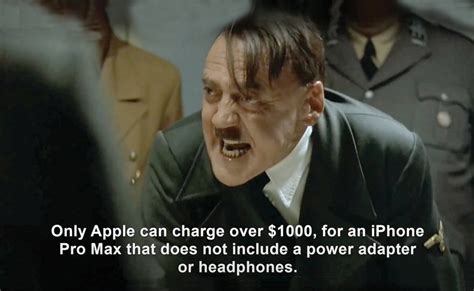 Shortly after the latter film was released, there was a frequently recurring video meme that repurposed the scene where Hitler has a conniption after the generals tell him that the remaining armies are unable to come to the rescue; new subtitles were added to adapt the scene to imagine various famous people reacting to bad news, for example, Hillary Clinton learning that she is about to lose the 2008 Democratic nomination for president to Barack Obama (language warning). Hilarious adaptations aside, Downfall is an enthralling, thought-provoking film.
The common element in the two movies is that, despite the terminal weakness of Dear Leader -- Stalin has had a stroke and lost control of his bladder and bowels, Hitler reigns over less than a square mile of territory and will soon kill himself -- his minions fall all over themselves to affirm their loyalty. These appear to be men of intelligence and leadership, they see that Dear Leader is leading the nation to disaster, there are enough of them to band together and push him out of power -- and yet they cannot break free. In Death of Stalin, Vyacheslav Molotov (played by Michael Palin) loudly denounces his wife for crimes against the state and justifies dead Stalin's decision to imprison and presumably execute her, right until the moment she walks back through the door of their flat.
Now, Donald Trump is no genocidal autocrat, and he did a great deal of good during his term of office, but these movies brought to mind the cult of personality that has surrounded him and which he actively encourages. Nothing Trump does is ever a mistake. It may seem like a mistake that he appointed numerous cabinet members whom he now denounces as disloyal idiots, but really he is playing 10-dimensional chess and only seeming to fail in order to expose the swamp. Elected officials, hoping for a share of the public adulation Trump enjoys, fall all over themselves to praise Trump, to claim his endorsement, and to make excuses for him. Trump made many unforced errors, but he does not show any indication of having learned from his mistakes to become a more strategic, focused, and self-disciplined leader.
The November election may very well end up as a rematch between Trump and Biden (or more likely, the Democrats will replace Biden after Trump is officially nominated by the Republican National Convention), but for now we have a much better choice on tomorrow's primary ballot.
If enough of us who understand that Ron DeSantis is the best choice vote for him, he can win delegates to the national convention. Maybe God will bless us, as He has blessed Florida, with better leadership than we deserve.
In addition to Oklahoma's presidential preference primary on March 5, 2024, a small number of local jurisdictions will have propositions: Haskell, Norman, Oilton (2), Dewey County, Logan County (3), McIntosh County, Major County, and Sharon-Mutual Public Schools (Dewey & Woodward Counties). One school district, Mannsville in Carter & Johnston Counties, has a special election for an unexpired board seat.
The longest ballot will be in Wagoner County, which has eight propositions relating to county sales taxes:
- Proposition No. 1: Make permanent the temporary 0.80% for operations and road and bridge improvements, originally approved in 2017
- Proposition No. 2: Make permanent the temporary 0.10% for Sheriff Office capital outlay and operations, originally approved in 2017
- Proposition No. 3: Make permanent the temporary 0.10% for General Fund purposes, originally approved in 2017
- Proposition No. 4: Repurpose half of the permanent 0.30% fire tax approved in 2004 to establish and provide ambulance service.
- Proposition No. 5: 0.125% for 30 years for courthouse facilities
- Proposition No. 6: 0.25% permanent for jail facilities and operations
- Proposition No. 7: 0.125% for 30 years for fairgrounds facilities
- Proposition No. 8: 5% lodging tax in unincorporated areas for parks and recreational facilities
Proponents call the package "Half a Penny for Wagoner County," referring to the new taxes in propositions 5, 6, and 7, but not considering the increase in taxes resulting from making a penny in temporary taxes permanent. The Wagoner County website has a PowerPoint with details on each proposition "for educational purposes only... does not imply an endorsement."
Some opposition has arisen, pointing out that this amounts to a 38% increase in the county's sales tax rate, from 1.3 cents to 1.8 cents on the dollar. That's on top of the state 4.5% sales tax and any city sales taxes. A group called Taxed Enough Already (TEA) points out that this will push total sales tax rates in the cities of Coweta and Wagoner up to 10.3%. Compare that to the combined 8.417% we pay in the City of Tulsa. While Gov. Stitt just signed a bill eliminating the state sales taxes on groceries, to go into effect in August, city and county sales taxes will continue to be imposed on necessities.
John Dobberstein of the Broken Arrow Sentinel has a detailed report on the Wagoner County propositions, specifically on a presentation made by Wagoner County Engineer Rachael Cooper to the Broken Arrow City Council. "Cooper admitted no public hearings had been scheduled about the tax proposals but they would be forthcoming in the next 60 days." The same article has links to the ballot resolutions approved by the Wagoner County Commission and notes the haste with which the propositions were moved forward.
District 1 Wagoner County Commissioner James Hanning said information was given to him about the propositions the morning of a recent County Commission meeting and he was asked to vote to whether approve the language with no prior knowledge.Hanning said he didn't know how the numbers were created but he was unsure 0.8% would be satisfactory or even enough to maintain roads in the county.
"We all, as well as Broken Arrow see the destruction of our roads and how much more it's costing us to fix them. So I don't know where the numbers came from. I'm simply telling you they were never presented to me," he told the Broken Arrow City Council after Cooper's presentation to them.
Firefighters in rural fire districts are unhappy that their permanent earmarked revenue stream is going to be cut in half (emphasis added).
Everyone agrees Wagoner County needs an ambulance service, and service should be improved across the county, but firefighters say taking away funds their departments rely on would hurt their ability to maintain equipment, attend training, or recruit and retain firefighters.On Monday night, firefighters asked County Commissioner Christina Edwards about what data supports the cut.
Edwards, who supports the ballot measure, was unable to answer the question.
The community also asked County Commissioner Tim Kelly, who also supports the proposal, the same question in a separate meeting.
His response was, "I get it. That's all you need to know."
Kelly was asked if he could provide the statistics and he said he could if he wanted to....
Another concern firefighters have is the county acknowledges never consulting any of the fire departments before proposing the idea.
I don't live in Wagoner County, but I would be reluctant to approve a permanent earmarked tax or any temporary tax longer than 5 years duration, as it eliminates opportunities for rebalancing revenues and priorities as costs and needs change. The need for Proposition No. 4 illustrates the hazard: Those who believe that the 0.30% fire district sales tax is generating more revenue than needed for that purpose now have to fight the holders of the concentrated benefit to repurpose the tax.
It's sketchy, to put it mildly, to schedule a sales tax election on a low-turnout date, with no hearings prior to the vote to put the propositions on the ballot and even one of the County Commissioners apparently kept in the dark. That kind of behavior by elected officials shouldn't be rewarded by the voters.
MORE:
KTUL: Wagoner County's 'half a penny campaign' draws debate over real cost of tax propositions
KOTV: Special Election In Wagoner County Could Impact Sales Tax
Group of Wagoner County residents holds rally against proposed sales tax increase
Feeds
 Subscribe to this blog's feed:
Support BatesLine
Show your appreciation and help fund hosting and research expenses:

Show your appreciation and help fund hosting and research expenses: